
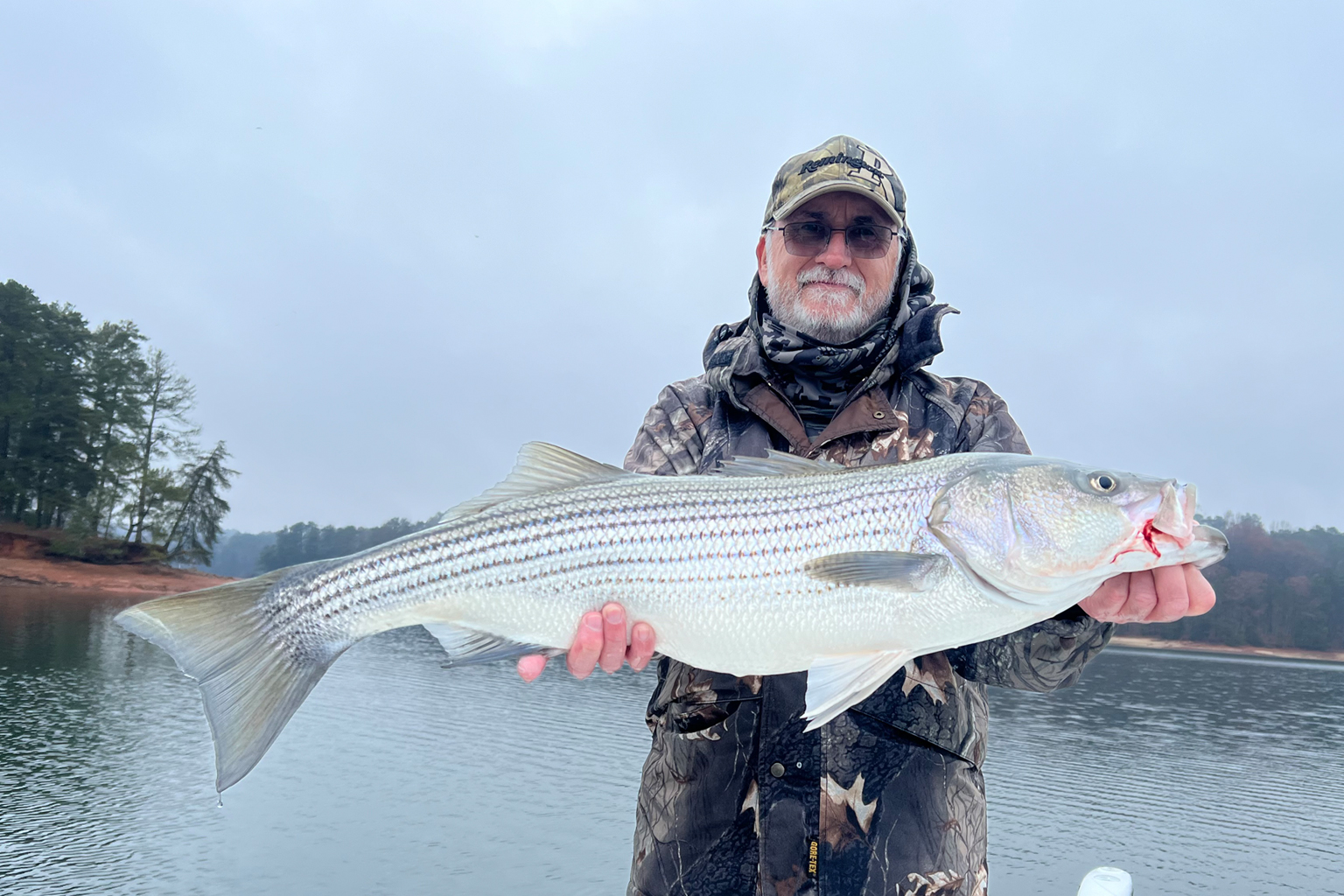

Across the southeastern United States, a select group of reservoirs share a unique ecological signature: they are powered by blueback herring. These sleek, fast-moving baitfish have transformed entire fisheries, reshaping predator behavior and challenging anglers to rethink long-held assumptions about where and how to target gamefish.
Whether you chase striped bass, largemouth, smallmouth, or spotted bass, learning to decipher a blueback-driven lake unlocks some of the most exciting and unpredictable fishing available.
I’m going to break down how blueback herring influence predator habits, the seasonal patterns that matter most, and the tactical adjustments that turn a day of searching into a day of catching.
The Blueback Herring Effect
Blueback herring (Alosa aestivalis) are coastal natives that entered many reservoirs through intentional stocking, accidental introductions, or bait-bucket transfers. Regardless of how they arrived, their presence triggered dramatic shifts in predator behavior:
1. Constant Movement
Unlike shad, herring roam tirelessly. They rarely stay on one piece of structure for long, pushing predators—especially striped bass and spotted bass—into nomadic patterns. Success on herring lakes depends less on fishing a “spot” and more on following the movement of life.
2. Open-Water Feeding
Herring prefer deep, clear, cool water and often hold over creek channels, main-lake basins, and offshore humps. This pulls predators away from traditional bank lines and makes sonar, contour study, and boat positioning far more important.
3. Predators Thrive
Striped bass, hybrid bass, and spotted bass grow exceptionally large in herring lakes thanks to the abundance of oily, high-calorie forage. When the herring boom, so do the fish that chase them.
Seasonal Breakdown: Where to Look and How to Fish
Understanding the herring calendar is helpful. Herring follow temperature, light, and spawning cycles, and predators follow them.
Spring: Spawn-Time Energy
Key Behavior: Blueback herring spawn when water temps hit roughly 62–70°F, often on sloping gravel banks, points, seawalls, and clay flats.
Predator Patterns:
- Striped bass cruise shallow at dawn, ambushing herring schools on the bank.
- Spotted bass and largemouth set up on points and shoals leading to the spawn.
How to Fish:
- Topwater walkers & pencil poppers (long casts over shallow points)
- Live or cut herring free-lined or lightly weighted
- Swimbaits or flukes worked quickly to imitate frantic baitfish
Early morning is often chaos—explosions, roving wolfpacks, and surface activity. Once the sun gets high, the action typically moves deeper.
Summer: Deep-Water Nomads
Key Behavior: As the heat settles in, herring gather in large schools over deep water—often 40 to 100 feet down.
Predator Patterns:
- Stripers push herring balls against trees, channels, and thermocline edges.
- Schools form tight pods easily visible on sonar.
How to Fish:
- Down-lines with live herring (the most consistent summer method)
- Vertical jigging spoons around sonar-marked bait clouds
- Trolling with umbrella rigs or deep crankbaits
Afternoon storms and falling barometers often spark deep-water feeds.
Fall: Bait on the Move
Key Behavior: Cooling temps drive bluebacks into major creeks and coves.
Predator Patterns:
- Stripers push in behind them.
- Spots and largemouth return to key secondary points and drains.
How to Fish:
- Topwater again—especially long, slender baits
- Live herring on planer boards in creek arms
- U-rigs mimicking small bait clusters
Watch for gulls, loons, and surface splashes. Fall fishing is all about being at the right place at the right moment.
Winter: Suspended Bait, Suspended Fish
Key Behavior: Herring ball tightly and hover in middle-depth water (20–50 feet), often in the middle of the lake.
Predator Patterns:
- Stripers suspend with the bait.
- Spots suspend above timber or along ditches.
How to Fish:
- Slow-trolled live bait on down-lines
- Jigging spoons bounced through the school
- Slow presentations like flutter spoons or ice jigs
In winter, stripers pursue smaller baits such as threadfin, so small herring that matches threadfin in size will be more productive.
Techniques for Maximizing Success
1. Use the Right Electronics
Fish in herring lakes are often not structure-oriented—they’re bait-oriented. Down-facing sonar and side imaging become essential tools.
Learn to identify:
- “Baitballs” of herring
- Tight arches beneath them (stripers)
- Fast-moving streaks (predatory charges)
If you find the bait, the fish are nearby.
2. Follow the Wind
Wind pushes herring onto banks, points, and humps. A calm point may be dead; a windy one may be alive with predators.
3. Keep Live Bait Healthy
Blueback herring are fragile.
You need:
- A round tank
- Strong aeration
- Frequent water changes
- Salt or commercial additives
Stressed herring die quickly or spin unnaturally.
4. Match the Speed and Cadence
Herring swim fast. Whether using artificials or live bait, motion is key:
- Long glides
- Erratic darts
- High-speed pulls
Predators expect prey that tries to escape—not flutter lazily.
Best Lakes for Blueback Herring Fishing
Many lakes have thriving populations. Some of the most iconic include:
- Lake Lanier (GA) – world-famous spotted bass fishery
- Clarks Hill / Thurmond (GA/SC) – top striper lake with endless open water
- Lake Murray (SC) – known for massive topwater striper feeds
- Lake Hartwell (GA/SC) – hosts huge herring-driven migrations
- Lake Jocassee (SC) – clear water, deep forage, and trophy predators
Each lake fishes differently, but the herring signature remains constant: fast, open-water, mobile game.
Final Thoughts
Fishing a blueback herring lake requires flexibility, patience, and an open mind. It pushes anglers beyond bank lines and predictable patterns and rewards those willing to chase bait, watch electronics, and react in real time. Whether you’re drifting live herring or firing topwater at breaking fish, every trip becomes a hunt—dynamic, challenging, and unforgettable.
Blueback herring changed these lakes forever. Once you learn to fish them, they might just change your fishing forever too.