
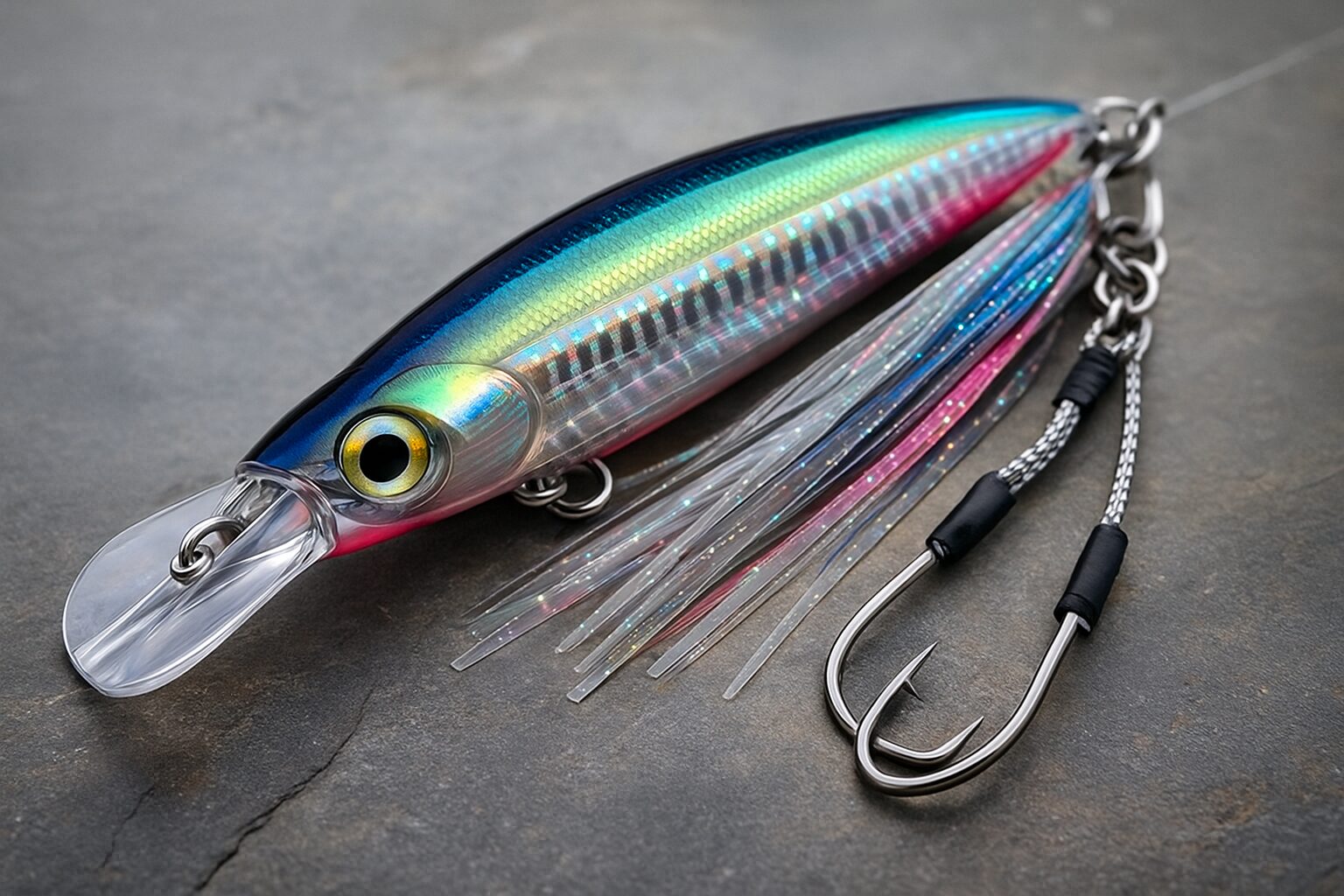

Trolling is one of the most popular and productive methods for targeting predatory fish, from inshore species like striped bass and kingfish to offshore giants such as tuna, mahi-mahi, and marlin. While lure selection, trolling speed, and presentation are critical components of success, the type of hooks used on these lures can significantly influence results. Assist hooks, traditionally associated with vertical jigging, have emerged as an effective solution for improving hookup rates and overall fishing efficiency in trolling applications.
Understanding Assist Hooks
Assist hooks differ from conventional treble or single hooks in both design and function. Rather than being rigidly mounted to the lure, assist hooks are suspended from a short cord—often Kevlar, PE braid, or other strong synthetic fibers—attached to the lure’s body or line tie. This flexible attachment allows the hook to move independently of the lure, which offers several advantages that are particularly relevant to trolling.
Improved Hookup Efficiency
When trolling, fish often strike aggressively at the head or body of a lure, sometimes resulting in short strikes or glancing bites. Assist hooks are positioned to intercept these attacks more effectively than traditional hooks. Because they hang freely, they are more likely to penetrate the fish’s mouth, even during quick or angled strikes, increasing the angler’s chances of landing the fish.
Reduced Snagging and Drag Issues
Trolling often involves running lures through areas with underwater structure, weeds, or floating debris. Traditional treble hooks can snag easily, causing lost lures and frustration. Assist hooks, however, fold close to the lure during movement and offer a more streamlined profile. This design reduces hang-ups while still maintaining the lure’s action, making it possible to troll near obstacles with less risk of losing gear.
Preservation of Lure Action
A key factor in successful trolling is the natural, enticing movement of the lure. Heavy treble hooks or poorly positioned singles can alter a lure’s swimming motion, reducing its effectiveness. Assist hooks, being lightweight and flexible, do not interfere with the lure’s intended action. Whether trolling a diving plug, a large minnow imitation, or a swimbait, the natural motion is preserved, keeping the lure attractive to predatory fish.
Enhanced Strength and Reliability
Trolling often targets large, powerful fish that can apply tremendous force to the hook and line. Assist hooks are designed with strength in mind, using high-quality forged or high-carbon steel and robust cord materials. This construction ensures that even hard-fighting species like tuna, kingfish, or striped bass can be landed with confidence, reducing the risk of hook failure or lost fish.
Customization and Versatility
Assist hooks offer anglers considerable flexibility in setting up trolling lures. They come in various sizes, cord lengths, and configurations—single or dual hooks—allowing the setup to be tailored to specific lure types, target species, or water conditions. This adaptability ensures that assist hooks can be optimized for both small inshore lures and large offshore trolling rigs.
Conclusion
While assist hooks are often associated with vertical jigging, their advantages translate exceptionally well to trolling applications. They improve hookup rates, reduce snags, preserve natural lure action, and provide the strength needed to handle powerful fish. For anglers pursuing trophy species in both freshwater and saltwater environments, equiping trolling lures with assist hooks can be a game-changing decision, transforming ordinary fishing trips into highly productive ones. By combining modern hook technology with effective trolling strategies, anglers gain a significant edge in landing more fish consistently and efficiently.