
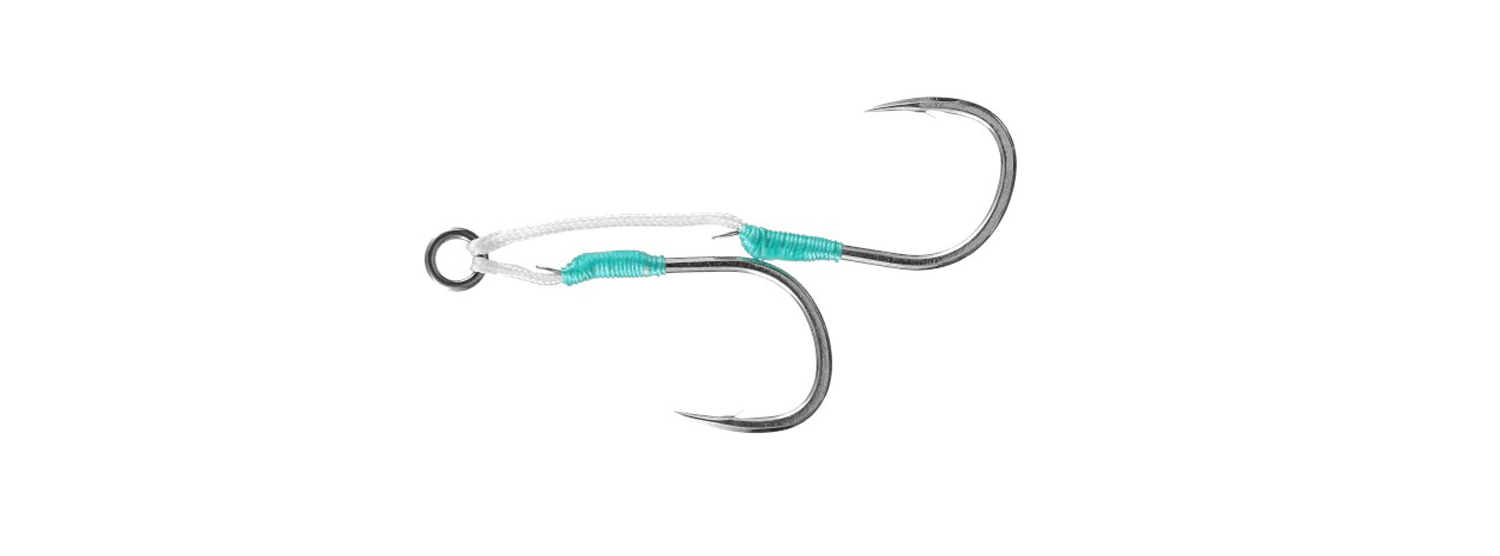

Jigging assist hooks have become an essential tool for anglers seeking to maximize the effectiveness of vertical jigs. Designed to address several challenges that traditional treble hooks or split-ring-mounted singles often present, assist hooks improve reliability, increase hookup efficiency, and enhance overall jig performance, especially when targeting deepwater or hard-fighting species.
One of the primary advantages of assist hooks is their ability to increase hookup efficiency. These hooks are suspended from a short, flexible cord attached to the top of the jig, positioning them precisely where predatory fish strike—typically near the head of the bait. By occupying this strategic location, assist hooks ensure that bites are hooked more quickly and cleanly, capitalizing on the natural behavior of predators who often target the head to immobilize prey.
Another significant benefit is their ability to reduce snags. Unlike treble hooks, which remain rigid and can easily catch on rocks, wrecks, ledges, or even the jig itself, assist hooks fold close to the jig’s body during the fall. This design minimizes unwanted hang-ups, making vertical jigging around structure far more productive and less frustrating for anglers.
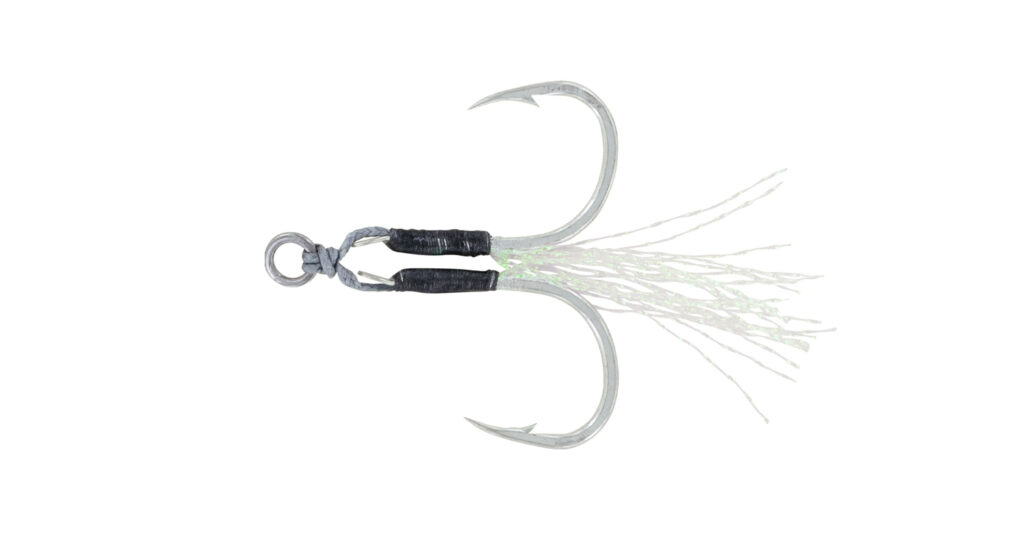
Assist hooks also prevent fish from leveraging the jig loose during the fight. A long metal jig can act like a pry bar, giving hooked fish the advantage to shake free. The flexible cord attachment of assist hooks eliminates this leverage, allowing the jig to swing naturally while maintaining a secure connection between hook and fish. This feature significantly improves landing percentages, especially with powerful or aggressive species.
In addition to enhancing hook performance, assist hooks preserve the natural action of the jig. Their light and flexible design does not interfere with the jig’s fluttering or darting motion, whereas heavier treble hooks can add unwanted drag and alter the lure’s movement. By maintaining the intended action, assist hooks ensure that the jig continues to attract strikes effectively.
Durability is another strength of assist hooks. They are commonly constructed from high-quality materials such as high-carbon or forged steel, often paired with short Kevlar or PE cords. This combination provides exceptional strength and sharpness, allowing anglers to handle big fish in deep water with confidence and minimal risk of hook failure.
Finally, assist hooks offer a high degree of customization. They are available in various lengths, cord strengths, hook sizes, and configurations, including single or dual hooks. This versatility allows anglers to tailor their setups to specific species, jig sizes, or fishing conditions, providing both efficiency and adaptability.
In conclusion, jigging assist hooks represent a significant advancement in vertical jigging. They enhance hookup rates, minimize snags, maintain the natural movement of the jig, prevent fish from shaking the hook loose, and deliver exceptional strength and dependability. For anglers pursuing species like tuna, amberjack, grouper, or snapper, assist hooks are far more than an optional tool—they are essential for successful deepwater fishing. Similarly, in freshwater applications such as targeting striped bass in bait-rich areas, these same advantages make assist hooks highly effective.