
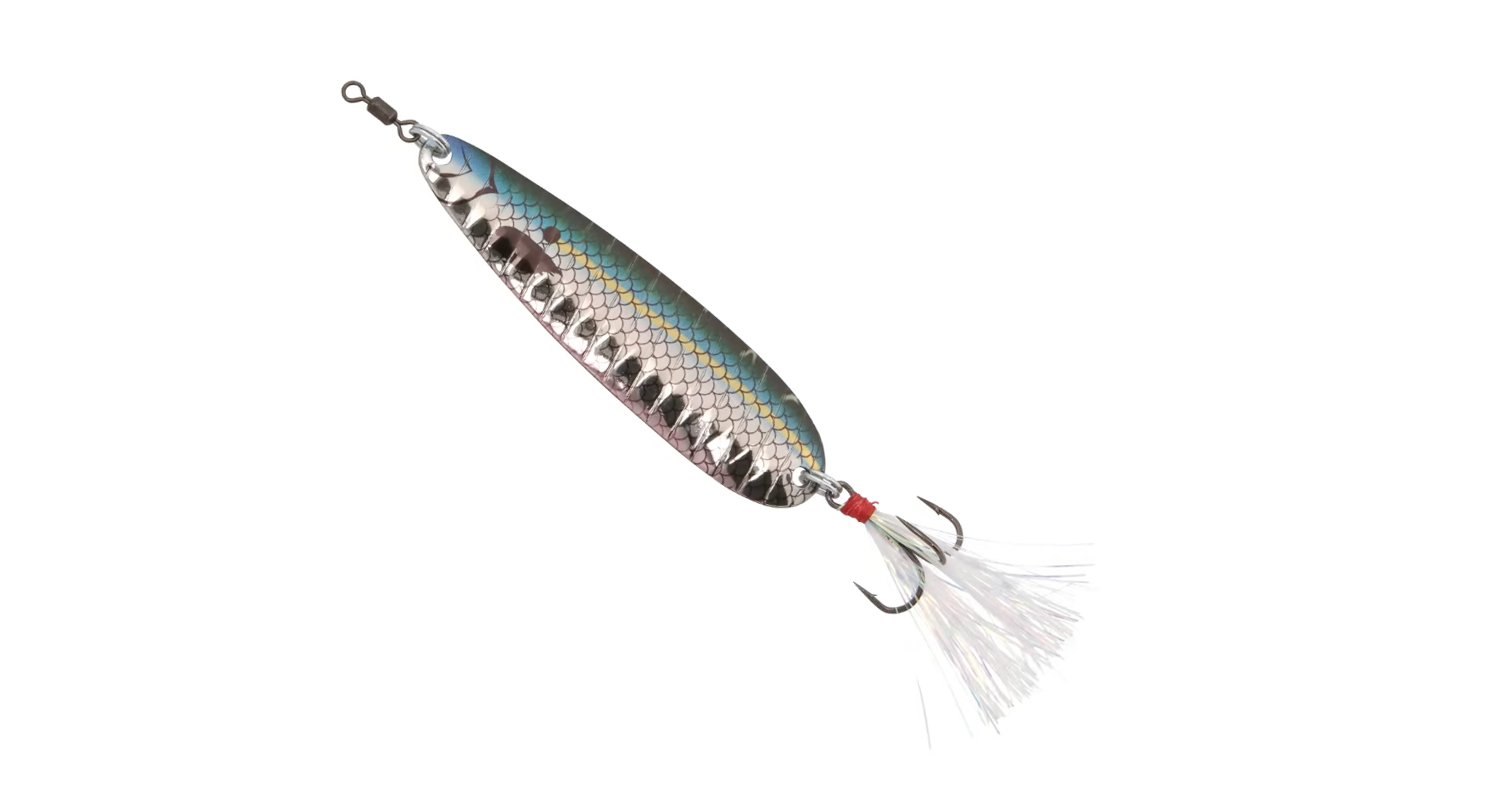

Using a flutter spoon for vertical jigging has become an effective way to target large predatory fish—especially striped bass—when they are feeding beneath bait schools or suspended throughout the water column. The technique blends precision, timing, and an understanding of how fish respond to a falling lure. When executed properly, flutter spoon jigging mimics the erratic descent of an injured baitfish or a wounded bunker chunk drifting downward, triggering powerful reaction strikes.
At the heart of this method is the unique design of the flutter spoon itself. These spoons are large, lightweight, and shaped to fall with an exaggerated, horizontal wobble. Unlike a traditional jig that drops quickly and vertically, a flutter spoon glides, flutters, and flashes as it sinks. Nearly all strikes occur during this fall, which makes controlling the amount of slack in your line the most important element of the presentation.
A fully slack line will allow the spoon to flutter perfectly, but the angler becomes disconnected from the lure and may never feel the strike. Too much tension, however, forces the spoon to fall unnaturally, reducing its appeal. The key is maintaining semi-slack line—just enough bow that the spoon can swim and flutter freely, yet still tight enough that a fish pulling a few inches of line will telegraph a clear tap through the braid.
The basic technique begins by dropping the spoon straight to the bottom or into the depths where fish marks appear on the sonar. Once it reaches the target depth, the angler initiates the first part of the cadence: a decisive upward stroke of the rod. This “lift” doesn’t need to be overly aggressive, but it should be firm enough to propel the spoon upward so it can begin its signature tumble. As soon as the lift is completed, the angler lowers the rod tip deliberately and introduces that vital semi-slack in the line, allowing the spoon to flutter back down. This cycle—lift, fall, lift, fall—forms the backbone of vertical flutter spoon jigging.
Anglers often refine this cadence by incorporating intentional “double taps,” where the hook lightly smacks the spoon on the fall. This metallic clicking sound adds an auditory stimulus that can draw fish from farther away. Adjusting the speed and intensity of the stroke also helps dial in what the fish want on a given day. Sometimes sharp, high lifts are most effective; other days, subtle, slower motions produce more strikes. A few quick reel cranks followed by a pause can also make the spoon wobble enticingly, and many strikes occur in those seconds of stillness.
Equipment choice plays an important role in maximizing sensitivity and lure control. Slow-pitch jigging rods or other responsive jigging blanks offer the perfect blend of softness and recoil, helping create that upward pop while remaining sensitive to the faintest bite. Carbon-fiber grips and exposed reel seats enhance this sensitivity further. Braided line is essential because it has no stretch, allowing the angler to feel every vibration, tap, or slight movement transmitted from the spoon. For reels, both baitcasters and spinning setups can work, but many anglers lean toward baitcasters for their torque and vertical control.
The effectiveness of vertical flutter spoon jigging is heavily tied to situational awareness. The best times to employ this technique are when fish are marking on the sonar—either suspended in the water column or holding beneath bait pods such as bunker. When bluefish are tearing through bait schools, they often leave behind drifting chunks, conditioning striped bass to watch for falling pieces. In these moments, a descending flutter spoon becomes an irresistible target. Even scattered marks throughout the column, where other presentations struggle, are ideal for this method because the spoon naturally reaches fish at multiple depths during each cycle.
Using a flutter spoon for vertical jigging is ultimately about mastering the fall, staying connected to the lure without restricting its action, and constantly reading the fish’s behavior. It is a technique that rewards attentiveness and experimentation—altering cadence, adjusting the stroke, and matching the mood of the fish. When these elements align, the flutter spoon becomes one of the most powerful and reliable tools for enticing big fish lurking below, turning vertical jigging into an art as much as a technique.