
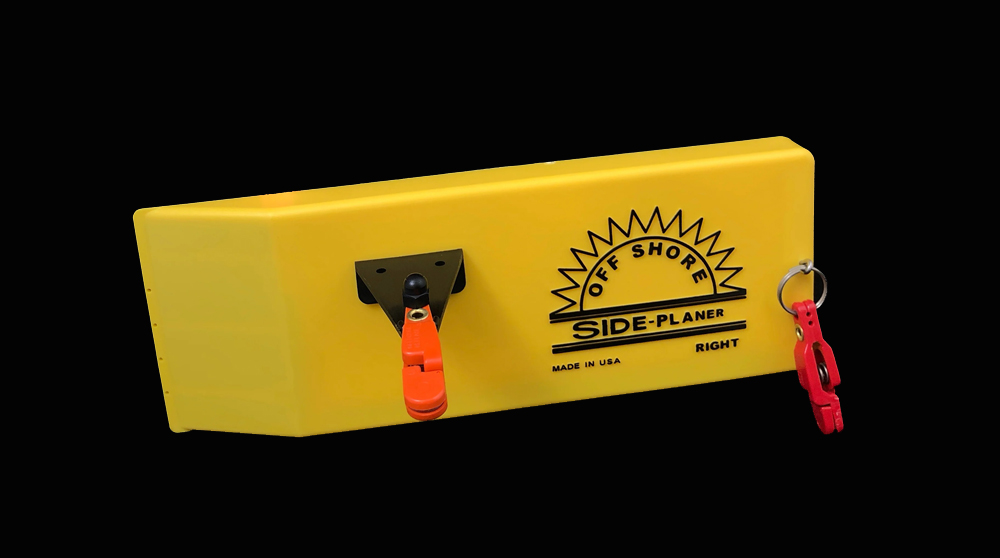

Planer boards are an essential trolling tool on lakes, allowing anglers to cover more water, run multiple lines, and present lures where fish are most likely to strike. At their core, planer boards are buoyant, angled devices that attach to a fishing line and use the forward motion of the boat to plane outward, spreading lines far to the left or right.
This horizontal separation helps anglers create an organized trolling spread, avoid tangles, and target fish that may be wary of boat noise or turbulence. Although planer boards come in different styles, their purpose and benefits remain consistent across species and lake environments.
The most common variety used on lakes is the inline planer board, which clips directly to an individual fishing line. Each rod gets its own board, and the design forces the board to track away from the boat, depending on which side it is deployed on. These boards are highly effective for popular lake species—walleye, trout, striped bass, crappie, and even pike—because they let anglers present baits in undisturbed water.
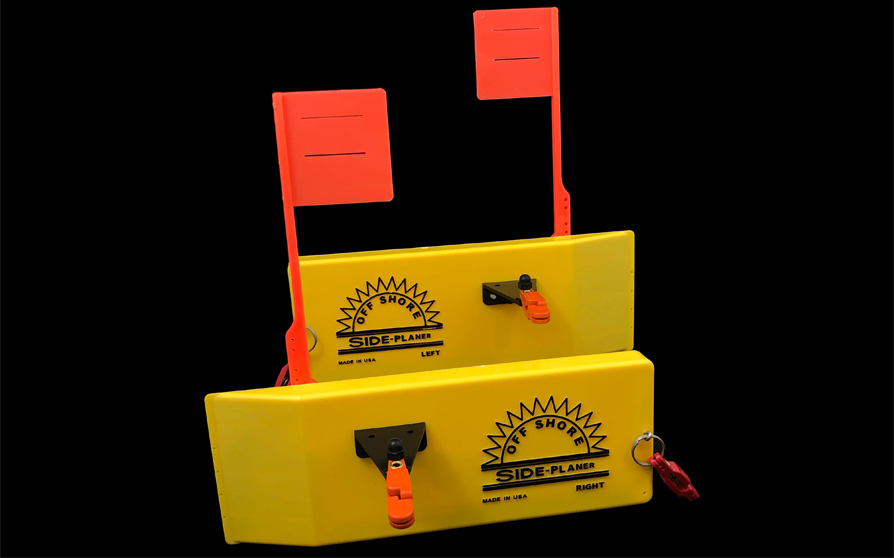
For larger vessels or salmon-style trolling, some anglers use mast systems with big boards pulled by tow lines. These can support many fishing lines at once, making them ideal for Great Lakes trolling where expansive spreads are common.
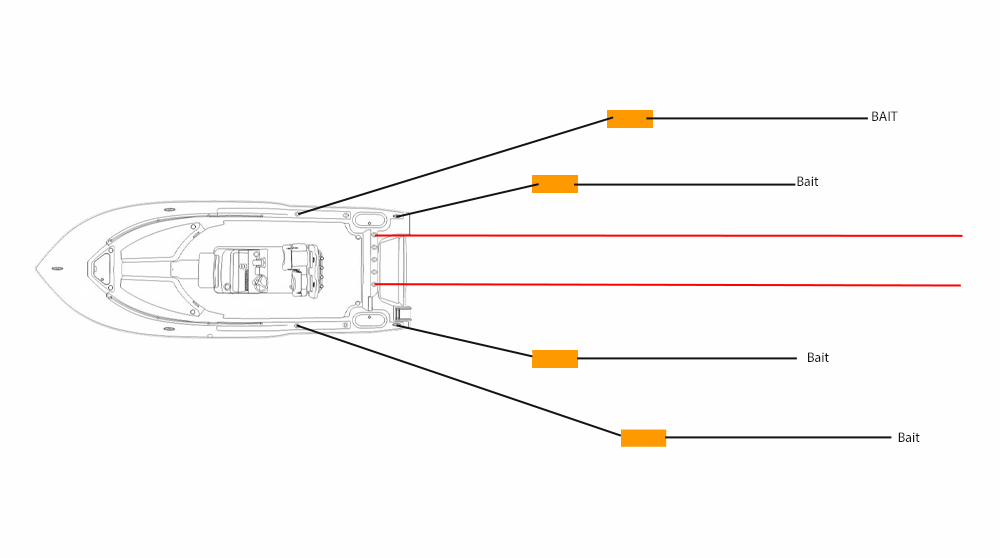
One of the primary advantages of planer boards is their ability to spread multiple trolling lines laterally. Instead of running baits directly behind the boat in a cluster, planer boards distribute them across a wide swath of water. This not only increases overall coverage, but also organizes lures by depth or style—shallow-running baits can be placed on the outside boards, while deeper or heavier presentations run closer to the boat. This systematic layout lets anglers mix crankbaits, spoons, live bait rigs, and jigs without fear of tangles, even when executing relatively tight turns or crossing structure.
The spread also creates an area directly behind the boat in which trolled baits, flat lines, or transom baits can be deployed while minimizing the risk of entanglement or interference. Of concern in such patterns is that a hooked fish can sweep across multiple lines and create significant entanglements. The more lines deployed, the greater the risk.
Another significant benefit is the ability to present lures away from the boat’s disturbance. Many freshwater species—especially walleye, trout, and stripers—tend to slide away from engine noise or the shadow of the hull. Planer boards move lures out into calmer, undisturbed water where fish feel more comfortable feeding. This is particularly important in clear water lakes, shallow flats, or near shorelines, where fish may spook easily. By keeping the boat farther from the strike zone, planer boards dramatically increase bite consistency.
Planer boards also serve as highly visible strike indicators. When a fish hits, inline boards react immediately—diving back, stalling, tipping on their side, or even briefly submerging. These visual cues are easy to spot even on choppy days, allowing anglers to identify strikes quickly and retrieve the rod without delay. Because the boards maintain line tension and spacing, they are useful not only for locating fish but also for controlling the presentation through shallow areas such as weedbeds, sandbars, and flats without driving the boat over the fish themselves.
Across lakes of all sizes, planer boards play a major role in modern trolling techniques. Whether targeting walleye on Lake Erie, stripers on inland reservoirs, salmon on the Great Lakes, or crappie in sheltered coves, planer boards enable anglers to maximize coverage, manage lure placement, and attract fish that might otherwise avoid the boat. By allowing precise control over both distance and depth, they have become one of the most versatile and effective tools for trolling success.