
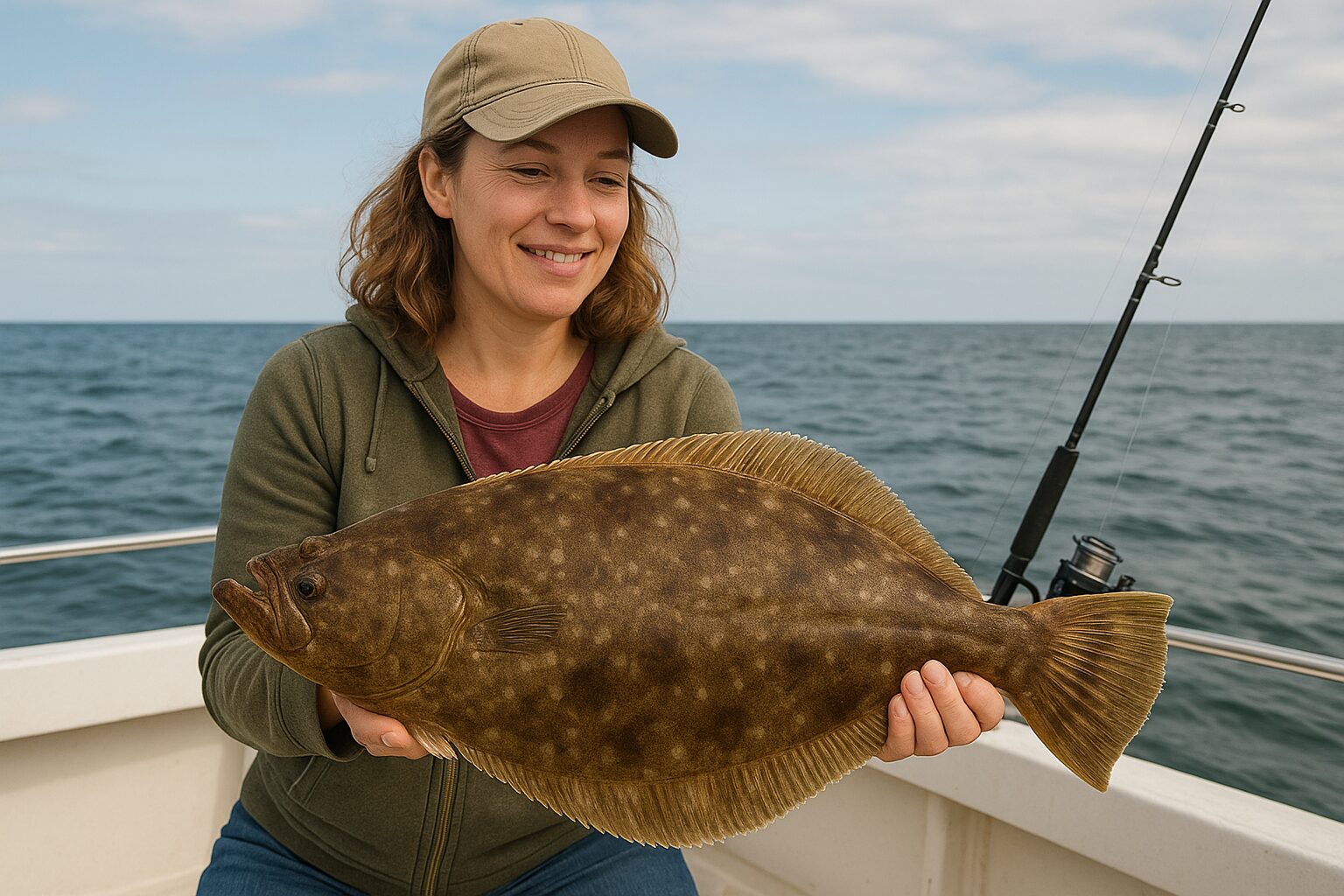

Targeting flounder in inshore waters requires selecting the right lures and employing effective tactics tailored to their behavior and habitat. When fishing bays, flats, estuaries, or creeks, several strategies can improve your success.
A primary consideration is the use of soft plastics on jig heads. Lures such as soft jerkbaits, paddletails, or shrimp imitations mounted on weighted jigs allow anglers to bounce or “walk” the bait along the bottom, which is ideal because flounder lie flat and ambush prey. Choosing the correct weight is important: it should be heavy enough to maintain contact with the bottom, yet not so heavy that the presentation appears unnatural. Lighter to moderate jig weights are generally preferred for inshore fishing.
Scented plastics or adding scent to your lures can be particularly effective, as flounder rely on both vibration and smell to detect prey, especially in murky water. Color selection is also key; bright or high-contrast colors such as chartreuse, white, or pink work well in stained water, while natural baitfish colors are more effective in clear water. Finally, slow retrieves that drag or hop the lure along the bottom tend to provoke more strikes than fast, chasing retrieves, and bucktail jigs with soft plastic trailers or small strips add action and vibration that attract flounder near structure.
Several artificial lures are particularly effective for inshore flounder. The classic jerkbait is versatile on a light to medium jig head, and excellent for bouncing or walking along the bottom. The Ned Rig is a slimmer variation suitable for finesse fishing. Berkley Gulp! Saltwater Swimming Mullet and Berkley Gulp! Saltwater Pogy are scented soft plastics with realistic swimming action, ideal for attracting flounder feeding on baitfish. Curly Tail Tube plastics provide lifelike action even on slow retrieves, imitating a struggling baitfish. Realistic minnow profiles are effective when flounder are actively targeting small baitfish. Size up for larger flounder, using bait profiles that mimic sizeable forage.
To increase effectiveness, anglers should focus on structure where flounder typically congregate, such as drop-offs, flat edges, grassy areas, docks, or submerged wood. Fishing during tidal movements, when flounder are most active, generally yields better results. Using light to moderate braided line paired with a fluorocarbon leader allows detection of subtle strikes while maintaining bottom contact. If your lure is unscented, applying a scent gel or attractant can further entice flounder to strike.
By combining appropriately weighted and colored soft plastics, scented options, bucktail jigs, and slow, bottom-focused retrieves, anglers can maximize their chances of success in targeting inshore flounder. These techniques, when adapted to specific conditions and habitats, provide a reliable approach to consistently catching flounder.