
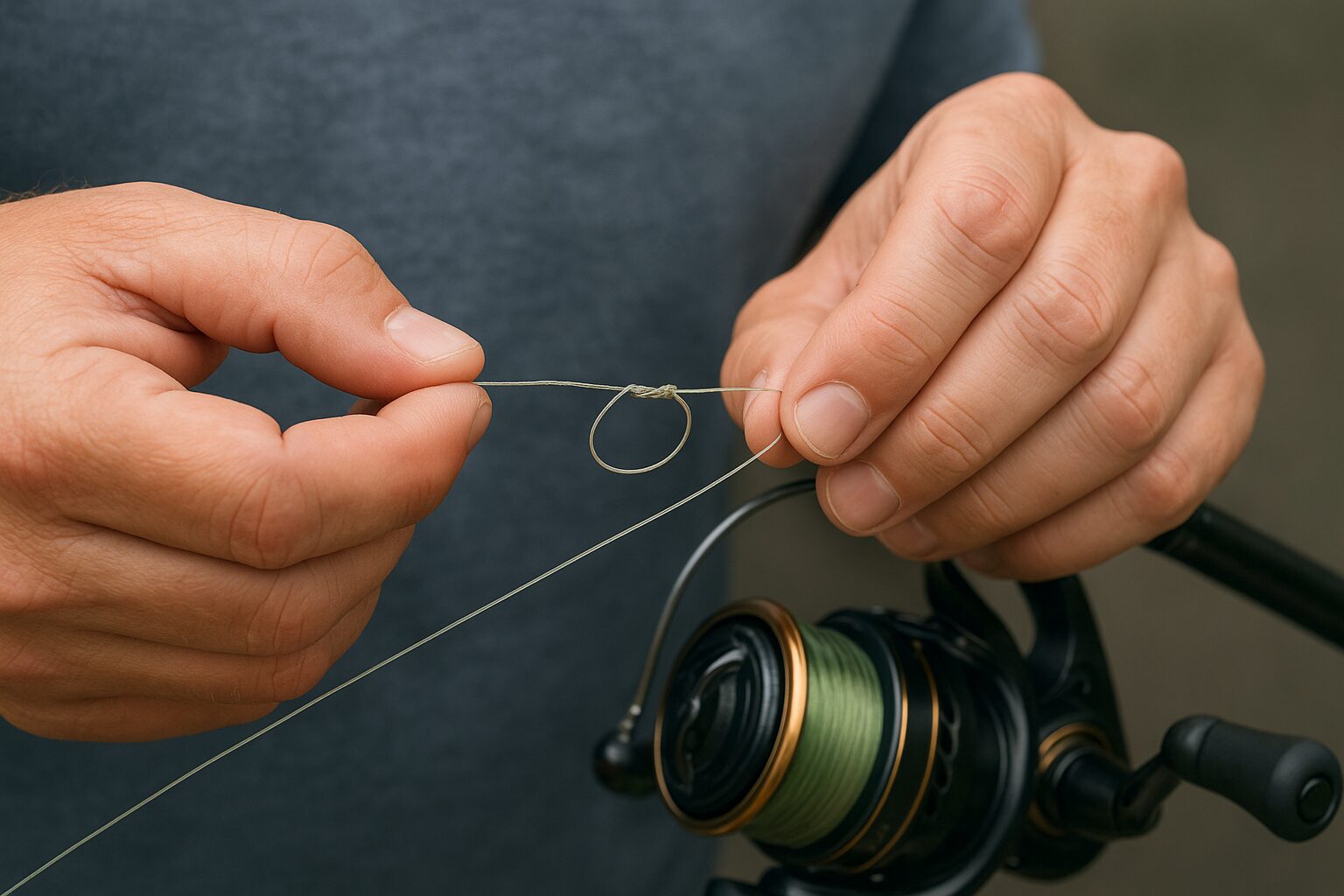

A topshot is a short section of monofilament or fluorocarbon added to the end of a braided main line which anglers use to blend the strengths of both materials while minimizing their weaknesses. Braid provides power, sensitivity, and capacity, but it lacks stretch and is vulnerable to abrasion. Mono and fluorocarbon, on the other hand, offer shock absorption, durability, and low visibility. By combining the two, a topshot creates a more balanced and versatile fishing system that performs well across many environments.
One of the primary benefits of a topshot is its ability to absorb shock. Because braid has virtually no stretch, hard hits or sudden surges from powerful fish can easily pull hooks, damage knots, or overload terminal tackle. A short section of mono or fluoro adds just enough give to cushion headshakes and violent runs, which is especially useful when targeting species such as tuna, wahoo, striped bass, or muskies. This built-in shock absorber helps protect your gear and increases your chances of landing the fish.
Abrasion resistance is another critical advantage. Rocks, reefs, shipwrecks, and even the bodies of certain game fish can quickly damage or sever braided line. A topshot places a tougher, more forgiving material at the point of contact, preventing sudden failures and providing an extra margin of safety. Fluorocarbon also offers the benefit of low visibility underwater, making the topshot a stealthier final segment of line when approaching wary or line-shy fish.
Topshots can also improve handling and casting performance. A longer section of mono lies more cleanly on the spool, reduces the chance of wind knots, and prevents braid from digging into itself under heavy drag. Some anglers even use very long topshots—sometimes more than 100 yards—to achieve the smoothness and stretch required for specific techniques such as trolling. This stretch is valuable when pulling lures offshore, because it buffers lure shock, improves hook-set timing, and contributes to more consistent lure action. For this reason, many offshore captains rely on long mono topshots over braid backing.
Choosing the right topshot length depends entirely on your fishing style and goals. Short topshots in the 3- to 15-foot range provide basic abrasion resistance and stealth for inshore casting. Medium lengths between 20 and 50 feet are ideal when additional shock absorption is needed for hard-hitting fish. Long topshots ranging from 50 to over 300 feet deliver smoother casting, greater stretch, or improved trolling performance. Different techniques favor specific lengths: inshore anglers typically use 6–8 feet; vertical jiggers and live-bait fishermen often rely on 15–20 feet; offshore big-game anglers may run 30–60 feet; and dedicated trollers may use 150–200 yards or more.
Because fishing scenarios vary widely, these guidelines help simplify the decision. For stealthy inshore work, 6–8 feet is a reliable starting point. Nearshore anglers can step up to 15–20 feet for added cushion and abrasion protection. Offshore big-game fishing calls for 30–60 feet, while trolling outfits benefit most from long mono topshots of 150–200 yards. In every case, the goal is to tailor the topshot to the demands of the environment, the species, and the technique.
Rule of Thumb as a Starting Point
| Fishing Style | Topshot Length |
| Stealth/abrasion only | 3–10 ft |
| Jigging/live bait | 10–30 ft |
| Big game general | 20–60 ft |
| Surface casting (pelagics) | 10–30 ft |
| Trolling offshore | 100–300 yd |
| Surf shock leader | 20–30 ft |
Quick Shortcut
If you’re unsure, use this:
- Inshore: 6–8 ft
- Nearshore: 15–20 ft
- Offshore big game: 30–60 ft
- Trolling: 150–200 yd mono
Ultimately, a topshot gives anglers the best characteristics of braid and traditional line in a single setup. It adds stretch where you need it, hides your presentation from cautious fish, guards against abrasion, and improves the overall performance of the reel. Whether fishing inshore, nearshore, or offshore, a well-chosen topshot is an invaluable part of a modern, versatile tackle system.