
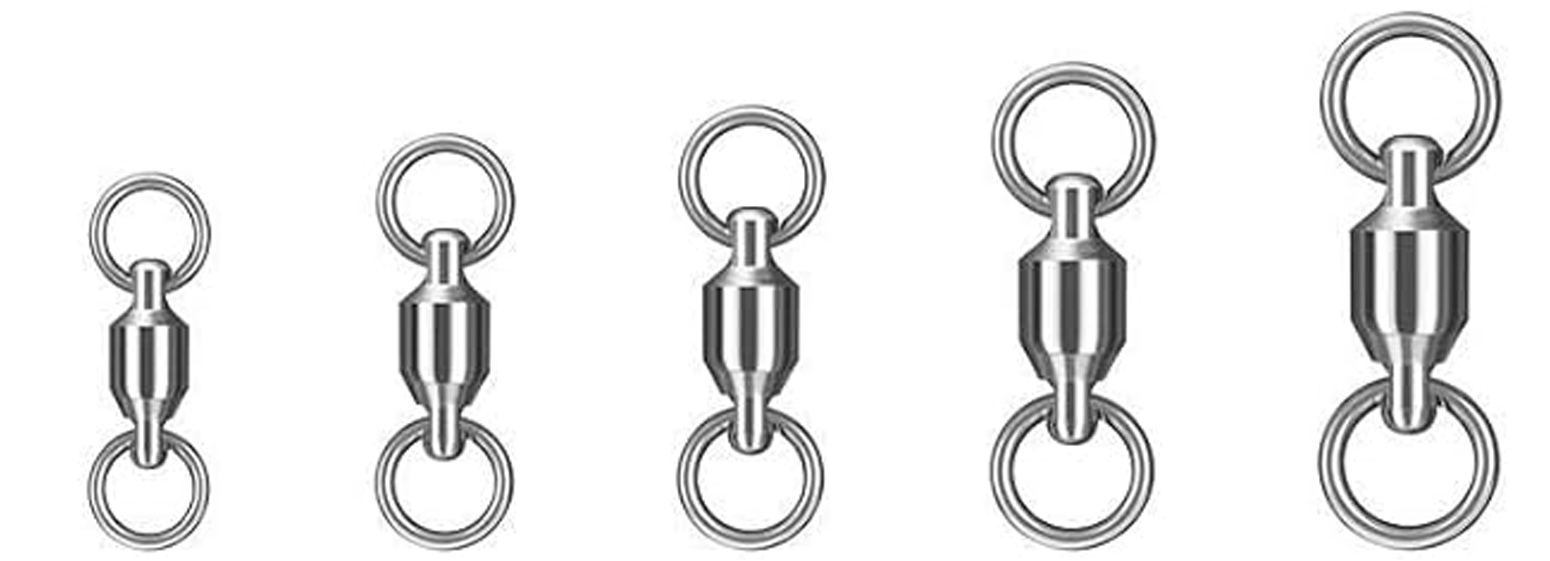

Choosing the right swivel for your fishing setup is all about matching strength, size, and function to the type of fishing you’re doing. Swivels may look simple, but they play an important role in preventing line twist, improving lure action, and creating clean connections between different parts of your rig. Selecting the correct one ensures your tackle works smoothly and your knots remain reliable when it counts.
The first consideration is size. A swivel should be strong enough to handle the fish you’re targeting without being so large that it becomes bulky or visible underwater. Light inshore setups, such as those for trout, redfish, or flounder, typically use swivels in the size 8–12 range. Larger species like tarpon or striped bass may require sizes 1–4, while offshore anglers targeting tuna or wahoo use even bigger hardware. In all cases, smaller is usually better as long as the swivel’s rated strength meets or exceeds your line’s breaking strength.
Strength rating is equally important. Swivels are labeled with pound-test ratings that indicate how much pressure they can withstand. Match the swivel to your main line or leader strength. For example, if you’re using 20–30 lb braid with a 20–25 lb leader, choose a swivel rated for at least 30 lbs. Heavy setups such as 80 lb braid with 60–80 lb leaders may require swivels rated 100 lbs or more, especially when targeting powerful fish.
Material and build quality matter as well. High-quality swivels made from stainless steel or brass resist corrosion and operate smoothly even under strain. Ball-bearing swivels provide the best rotation and are ideal when using lures that cause a lot of twist—spoons, jigs, or trolling baits. Barrel swivels are cheaper and effective for most basic rigs, while crane swivels offer smoother rotation than barrels but at a lower cost than ball-bearing models.
The type of fishing technique also influences your choice. When casting lures like spoons or in-line spinners, choose a high-quality swivel to prevent twist that weakens your line. For live bait rigs, a small, stealthy swivel helps keep the presentation natural. Trolling or deep jigging often requires the durability and smooth rotation of ball-bearing swivels. And when fishing around structure, choose hardware that can handle abrasion and sudden bursts of pressure.
Finally, match the swivel style to your terminal tackle needs. Some applications require a simple swivel for bite leader connections, while others benefit from snap swivels that allow quick lure changes. However, snaps must be strong and high-quality to avoid accidental openings, especially when targeting big fish.
By paying attention to size, strength, material, and application, you can confidently choose the right swivel for any fishing situation. A proper swivel not only improves performance but also prevents preventable failures—helping you fish more effectively and land more fish.